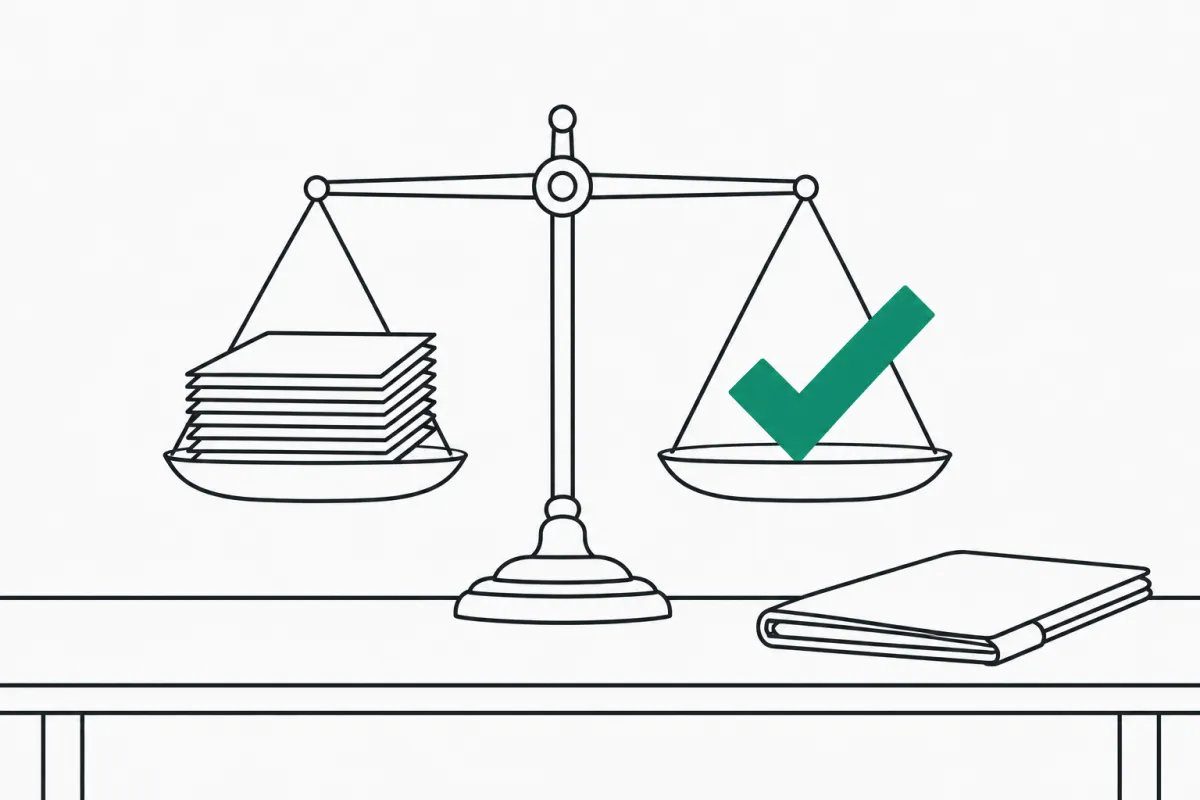
The IRS can remove a penalty through abatement when a taxpayer meets specific conditions. The three main relief routes are first-time abatement (FTA), which is an administrative waiver for one clean tax period, reasonable cause, which requires proof that the failure was beyond the taxpayer's control, and statutory exceptions written into the Internal Revenue Code. Part 3 of the Special Enrollment Examination (SEE) tests all three, and penalty abatement questions appear regularly in the Representation Before IRS domain.
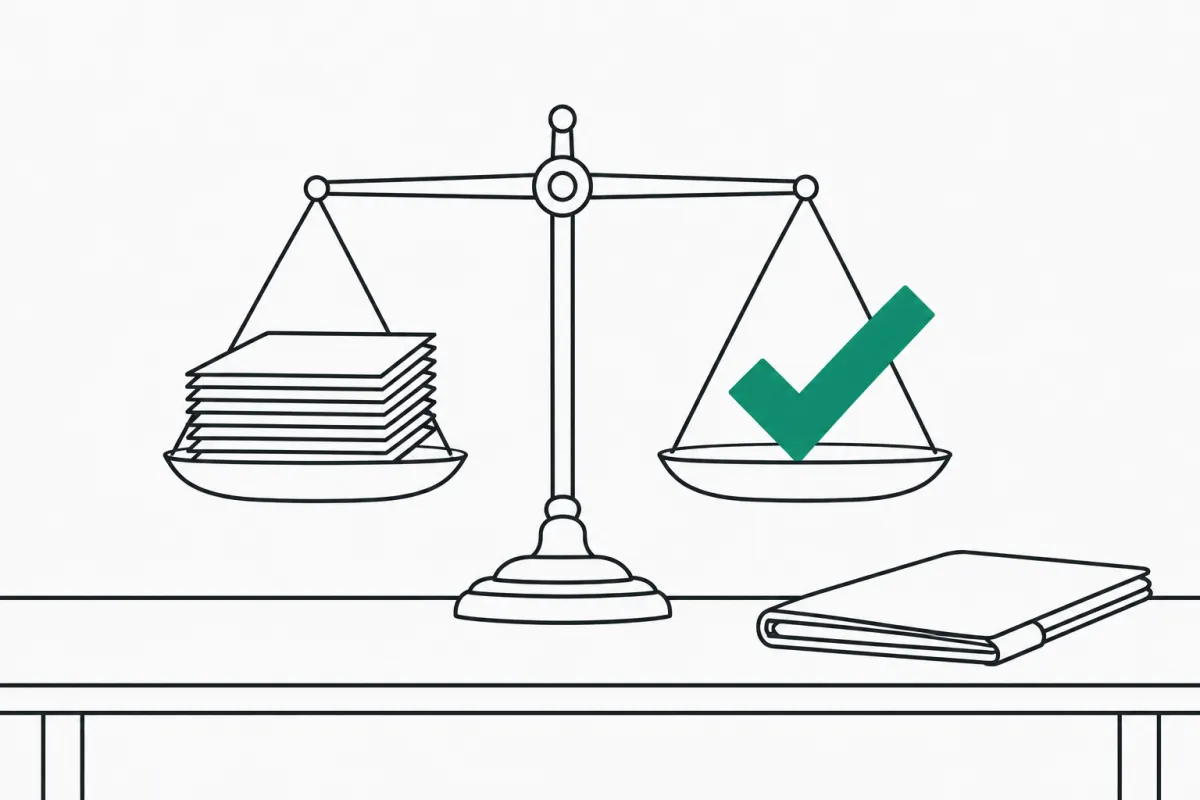
This guide from VantageEA, an Enrolled Agent (EA) exam practice platform, walks through the penalty types, the abatement standards, the procedure for requesting relief, and the exam traps that cost Part 3 candidates points.
Which IRS penalties appear most often on Part 3?
Part 3 focuses on four penalty categories. The failure-to-file and failure-to-pay penalties are the most tested because they involve math, and the accuracy-related and fraud penalties test whether you know the different defenses.
| Penalty | IRC section | Rate | Maximum |
|---|---|---|---|
| Failure to file (FTF) | Section 6651(a)(1) | 5% of unpaid tax per month | 25% |
| Failure to pay (FTP) | Section 6651(a)(2) | 0.5% of unpaid tax per month | 25% |
| Accuracy-related | Section 6662 | 20% of the underpayment | 40% for gross valuation misstatements |
| Fraud | Section 6663 | 75% of the underpayment | 75% |
When both FTF and FTP apply for the same month, the FTF penalty drops by the FTP rate, so the combined charge for any overlapping month is 5% (4.5% FTF plus 0.5% FTP). After 5 months of overlap the FTF penalty reaches its 25% cap, and the FTP penalty continues running on its own. If a return is more than 60 days late, a minimum penalty applies: the lesser of $525 (returns due in 2026, $510 for returns due in 2025) or 100% of the unpaid tax. The EA exam numbers to memorize for 2026 guide lists other thresholds you should know.
What is first-time abatement and who qualifies?
First-time abatement is an administrative waiver described in IRM 20.1.1.3.3.2.1. It removes an FTF, FTP, or failure-to-deposit (FTD) penalty for a single tax period without the taxpayer showing reasonable cause. Three conditions must be met:
- Clean 3-year history: no penalties (other than the estimated tax penalty) for the 3 tax periods before the one in question.
- Filing compliance: all currently required returns have been filed, or valid extensions are in place.
- Payment compliance: any tax due has been paid or the taxpayer has an approved payment arrangement.
FTA applies to only one period at a time. If a taxpayer owes an FTF penalty for 2024 and an FTP penalty for 2025, and 2024 meets the FTA criteria, FTA applies only to 2024, the earliest period. Any later period needs reasonable cause or another relief route. The IRS can apply FTA at the time a penalty is proposed (before it posts to the account) or after it has been assessed. Many practitioners request FTA by phone, and the IRS processes it during the call.
Here is the key limitation: FTA covers FTF, FTP, and FTD penalties only. It does not cover the accuracy-related penalty, the fraud penalty, or the estimated tax penalty under IRC Section 6654.
How does reasonable cause work as a penalty defense?
Reasonable cause is a facts-and-circumstances test under IRM 20.1.1.3.2 and IRC Section 6664(c). The taxpayer must show that the failure happened despite ordinary business care and prudence. Unlike FTA, reasonable cause applies to a wider set of penalties, including the Part 3 accuracy-related penalty under Section 6662.
The taxpayer carries the burden of proof. A bare statement that "I did not know" does not satisfy reasonable cause. The explanation must identify a specific event or circumstance and connect it to the late filing, late payment, or understatement.
What factors does the IRS weigh for reasonable cause?
IRM 20.1.1.3.2 lists several categories the IRS examines. The weight of each factor depends on the penalty and the taxpayer's situation:
- Death, serious illness, or unavoidable absence: a taxpayer hospitalized through the filing deadline may qualify, but the IRS looks at whether someone else (a spouse, an employee, or an authorized representative) could have filed.
- Fire, casualty, or natural disaster: records destroyed in a flood or wildfire support reasonable cause when the taxpayer can show the loss prevented compliance.
- Inability to obtain records: the taxpayer made reasonable efforts to get the information and the records were in someone else's control.
- Reliance on advice of a tax professional: the taxpayer gave the professional complete and accurate information, and the advice was on a matter the professional was competent to address. The Form 2848 vs Form 8821 guide covers the authorization forms representatives file.
- Reliance on erroneous IRS written advice: the taxpayer asked the IRS a specific question, provided complete facts, and relied on the written reply. This is a statutory exception under IRC Section 6404(f).
- Ignorance of the law: rarely accepted alone, but the IRS considers the taxpayer's education, whether the issue involved a recent or complex law change, and whether a reasonable person in the same position would have known.
One quotable rule: the IRS asks what a reasonably prudent person would have done in the same circumstances. If that person would have filed late too, the penalty should come off.
Can accuracy-related and fraud penalties be abated?
Yes, but through different routes. The 20% accuracy-related penalty (negligence, substantial understatement, or substantial valuation misstatement under Section 6662) can be removed if the taxpayer demonstrates reasonable cause and good faith under IRC Section 6664(c)(1). The IRS evaluates the effort the taxpayer made to report correctly, whether the taxpayer relied on professional advice, and whether the understatement arose from a complex issue.
For a substantial understatement (the larger of 10% of the correct tax or $5,000 for individuals), the penalty also goes away for any portion where the taxpayer had substantial authority for the position or where the position was adequately disclosed on Form 8275 and had a reasonable basis.
The 75% fraud penalty under Section 6663 has no reasonable cause defense. Once the IRS proves fraud, the taxpayer cannot remove that penalty through reasonable cause or FTA. The IRS bears the burden of proving fraud by clear and convincing evidence, and the taxpayer bears the burden only if the IRS established fraud for any portion of the underpayment. This burden-of-proof distinction between the accuracy-related and fraud penalties is a frequent Part 3 question.
How do penalty abatement and interest abatement differ?
Penalties and interest follow different rules, and the exam tests whether you can tell them apart. A penalty can be abated for reasonable cause, FTA, or statutory exceptions. Interest, by contrast, generally cannot be abated except when it results from an unreasonable IRS error or delay under IRC Section 6404(e).
When the IRS abates a penalty, the interest that was charged on that penalty amount is automatically removed. The underlying tax interest stays. So a successful FTA request lowers both the penalty and the interest attributable to it, but any interest on the unpaid tax continues to accrue. The interest and abatement rules topic page covers the interest computation and the narrow grounds for abating interest on tax.
What is the procedure for requesting penalty abatement?
The procedure depends on the type of relief:
- FTA by phone: a representative with a valid Form 2848 on file calls the IRS Practitioner Priority Service (PPS) line, asks for FTA, and the agent applies it during the call if the account meets the three conditions.
- Reasonable cause by letter or Form 843: the taxpayer or representative files Form 843, Claim for Refund and Request for Abatement, with a written statement explaining the circumstances and attaching supporting documents (medical records, insurance claims, correspondence with the tax professional).
- During an audit: the examiner can remove penalties at the close of an examination if reasonable cause is established during the case.
- Appeal a denial: if the IRS denies the request, the taxpayer can ask for a review by the IRS Independent Office of Appeals. If the penalty relates to a proposed notice of deficiency, the taxpayer can raise reasonable cause in Tax Court.
- Collection Due Process (CDP) hearing: when the IRS issues a lien or levy notice, the taxpayer can raise penalty abatement as an issue during the CDP hearing.
The IRS must follow its own procedures in the Internal Revenue Manual when evaluating abatement requests. An Enrolled Agent who knows the IRM criteria can frame the request to match the factors the IRS employee is trained to check.
How does Part 3 test penalty abatement?
Penalty abatement questions on Part 3 follow a few patterns. Knowing these patterns before exam day saves time:
- FTA eligibility: a scenario gives penalty history for 3 prior years, and you decide whether the taxpayer qualifies. Watch for an estimated tax penalty in one of those years, because the estimated tax penalty does not disqualify FTA.
- Reasonable cause vs. FTA: a question describes a taxpayer who had a penalty 2 years ago. FTA fails (the 3-year clean window is broken), so reasonable cause is the correct answer.
- Penalty math: a taxpayer files 4 months late with $10,000 of unpaid tax. The combined penalty for 4 overlapping months is 4 times 5%, or $2,000. The exam tests whether you apply the 5% combined rate or mistakenly add 5% and 0.5% for each month.
- Fraud burden of proof: who proves fraud? The IRS must prove it by clear and convincing evidence. The taxpayer proves reasonable cause for accuracy-related penalties by a preponderance of the evidence.
- Which penalties FTA covers: FTA removes FTF, FTP, and FTD. It does not remove accuracy-related, fraud, or estimated tax penalties.
Part 3 of the SEE had a pass rate of 70% in the 2024-2025 testing year, according to figures compiled from Prometric score data (the IRS does not publish official pass rates). Penalty abatement falls under the Representation Before IRS domain, which carries significant weight on the exam. Review the IRS statute of limitations guide next, because the statute questions and the penalty questions often share the same fact pattern.
How should you study penalty abatement for the 2026 EA exam?
Each part of the SEE has 100 questions (85 scored and 15 experimental) in 3.5 hours, and you need a scaled score of 500 on the 200 to 800 scale to pass. According to the IRS Enrolled Agents FAQ, the US testing window runs July 1, 2026 to February 28, 2027 at PSI test centers or through PSI online proctoring, and the fee is $317 per part.
- Memorize the penalty rates and caps: FTF at 5% per month (25% max), FTP at 0.5% per month (25% max), accuracy-related at 20%, fraud at 75%. Know the $525 minimum penalty for returns more than 60 days late.
- Learn the FTA conditions: 3 clean years, all returns filed, tax paid or arranged. Practice deciding whether a given history qualifies.
- Separate the defenses by penalty type: FTA for FTF/FTP/FTD, reasonable cause for accuracy-related, no defense removes a proven fraud penalty.
- Work timed questions and track which penalty patterns you miss. The penalty abatement topic page collects practice questions on this material.
VantageEA EA mock tests give you 5,000+ practice questions and show your number correct out of 100, with 70 correct as the pass mark, plus an estimated PSI score range. The week-by-week EA exam study schedule places penalty and representation topics in its Part 3 block.
Ready to Practice Part 3 Penalty Abatement Questions?
Practice penalty abatement with VantageEA EA mock tests
VantageEA, an Enrolled Agent exam practice platform, gives you 5,000+ practice questions and topic analytics that show whether FTA eligibility, reasonable cause, and penalty math questions are costing you points.
Take a free EA practice test · Study the penalty abatement topic · View plans and pricing